

THE WISDOM OF TRADITIONAL TIBETAN MEDICINE
TO MAINTAIN HEALTH AND ADDRESS IMBALANCES
Tibetan Medicine is an ancient healing science, which utilizes a holistic, compassionate approach to the wellness of body and mind, in order to address pain, disease, and suffering of body and mind. With our guidance, patients can benefit when they carefully follow a holistically recommended approach combining diet, lifestyle, and Tibetan herbal remedies for issues, such as:
Digestion Problems
Allergies
Inflammation
Always in Pain
Stress & Anxiety
Always Tired
Trouble Sleeping
Menstrual Issues

Breathing Problems
Low Libido




With our guidance, patients can find relief carefully following a holistically recommended approach combining diet, lifestyle, and Tibetan herbal remedies.
HOW DOES IT WORK
01 ASSESSMENT
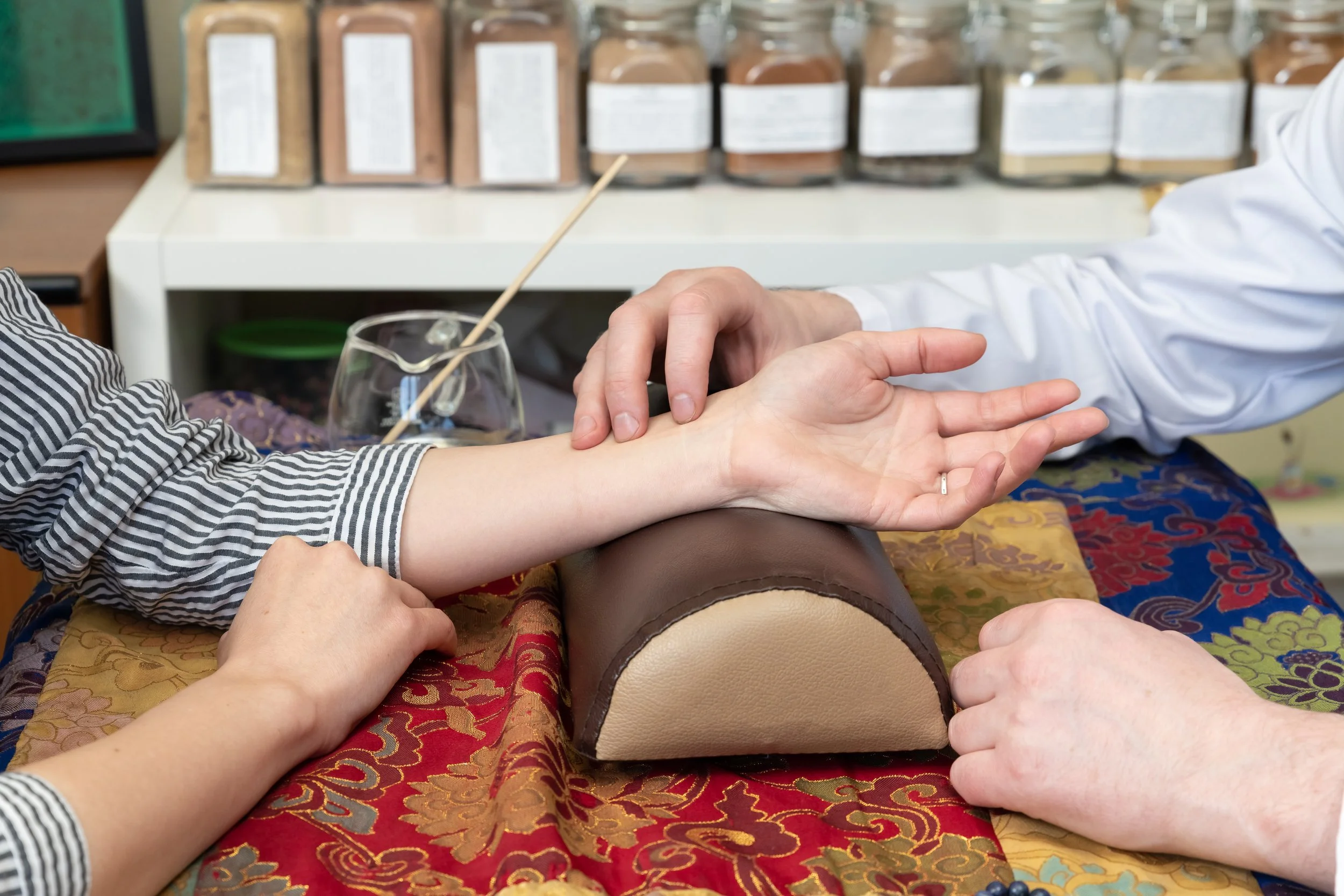
The practitioner will take a pulse reading and may perform a urine analysis, which offer a lens on the patient’s particular constitution and health.
02 HANDS-ON TREATMENT
After the initial assessment, the practitioner may recommend a single or combination of non-invasive therapies to provide relief for discomfort, clear blockages, or benefit the humors of the body:
-
Cupping therapy clears stagnation of the humors, or vital energies of the body. In traditional Tibetan Medicine, disease arises when there is a blockage of a channel, or a humor enters the wrong channel or region of the body. Cupping can bring the humors back to a balanced state. Specific ailments that this can relieve are back pain and digestive discomfort, but cupping can benefit all the humors of the body.
-
Moxibustion therapy relieves many disorders, such as stress, insomnia, joint pain and stiffness, and digestion issues. By gently applying heat to a sensitive point with the Tawa herb (Artemesia vulgaris), moxibustion stimulates free flowing circulation of wind and the drying of phlegm. A type of wood called seng deng (Rhamnella gilgitea) is sometimes also used, and is particularly effective in drying lymphatic fluid which can be applied to alleviate stress.
-
Fomentation may be hot or cold. Hot fomentation can incorporate warm herbal compresses, like nutmeg and caraway for stress. The herbs can be heated with either water or oil. Hot fomentation can also be performed with the use of warm salts, or warm mud, clay, or stone. Cold fomentation is usually done with cool river stone.
03 PRESCRIBED APPROACH
The practitioner will make recommendations which may include dietary or lifestyle changes, as well as herbal supplements that the patient can incorporate to bring their health back into balance.
INITIAL HEALTH CONSULTATION
1 hour
$50
FOLLOW-UP CONSULTATION
45 minutes
$30
TIBETAN MEDICINE FAQS
-
Typically the practitioner will take your pulse, look at your tongue and eyes, and ask questions about your health and any symptoms you are experiencing. Occasionally a urine sample may be taken. Depending on these examinations, the practitioner might offer dietary or lifestyle recommendations, Tibetan herbal medicines, or other treatments.
-
Pulse diagnosis is a sensitive technique so it is recommended to avoid drugs and alcohol, excessive intake of coffee & tea, fasting, overeating, excessive sleeping, staying up all night, or sexual intercourse 24 hours before the pulse is taken as these factors can affect the pulse reading.
-
Tibetan Medicine is considered an integrated system that has been influenced by traditional Indian, Chinese, and Persian medical systems. While aspects of Tibetan Medicine may seem analogous to these other systems, it is also unique in many ways, such as formulae for medicines derived from Himalayan herbs and plants, and having a Buddhist framework as its foundation. The fundamental text was written in the 8th century AD, but Tibetan Medicine has been practiced in various forms for over 3000 years.
-
Tibetan Medicine is complementary to modern, “Western” medicine but is not in conflict with it. Its approach to health is holistic: this can be helpful for systemic problems, such as autoimmune disorders that elude modern treatments, which aim to target symptoms with specificity. Tibetan medicine can also be applied as part of a regimen in conjunction with a more modern treatment. Moreover, there are instances when going to a hospital is more appropriate than relying on Tibetan medicine. In some situations, your practitioner will recommend a modern doctor for your treatment. We are not against modern medications, procedures, or vaccines. We also respect each client’s autonomy and choices in their own health journey.
-
Unfortunately, we are unable to accept insurance for health consultations, massage, or yoga.